

Solar power systems
Five configurations for homes, businesses, remote sites, mobile power and farm water pumping. Each system is designed from a site survey. Output and storage are set by site conditions, your load and your equipment.
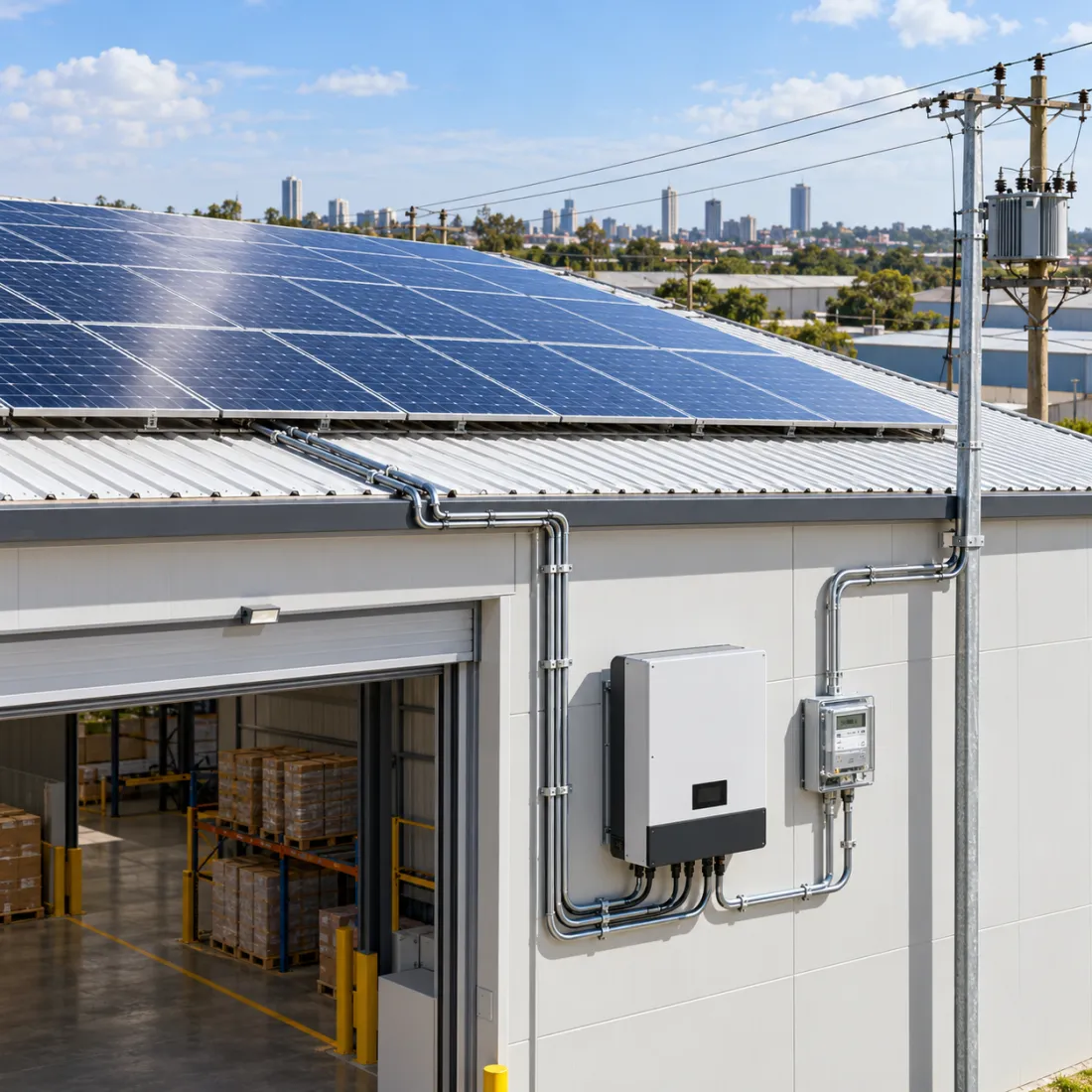
Grid-tied solar
Rooftop solar connected to the utility grid through a grid-tie inverter, so homes and businesses use their own solar generation alongside grid power.
- Best for
- Homes and businesses with grid supply
- Core parts
- Rooftop panels and a grid-tie inverter
- Sized by
- The site and any export arrangement
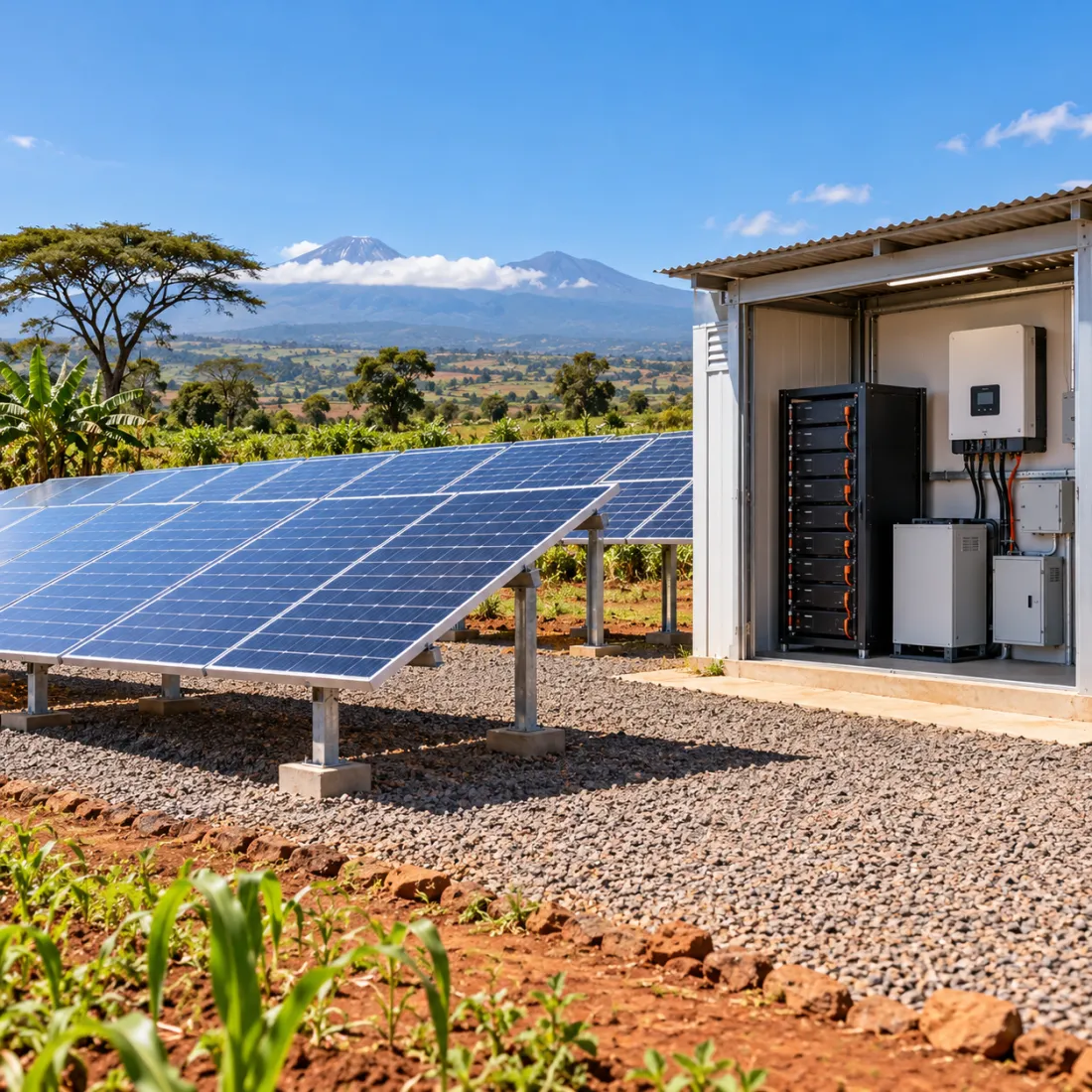
Off-grid solar
Solar panels, battery storage and an inverter for places without dependable grid service.
- Best for
- Sites without reliable grid power
- Core parts
- Panels, battery storage and an inverter
- Sized by
- Your electrical load and the backup time you need
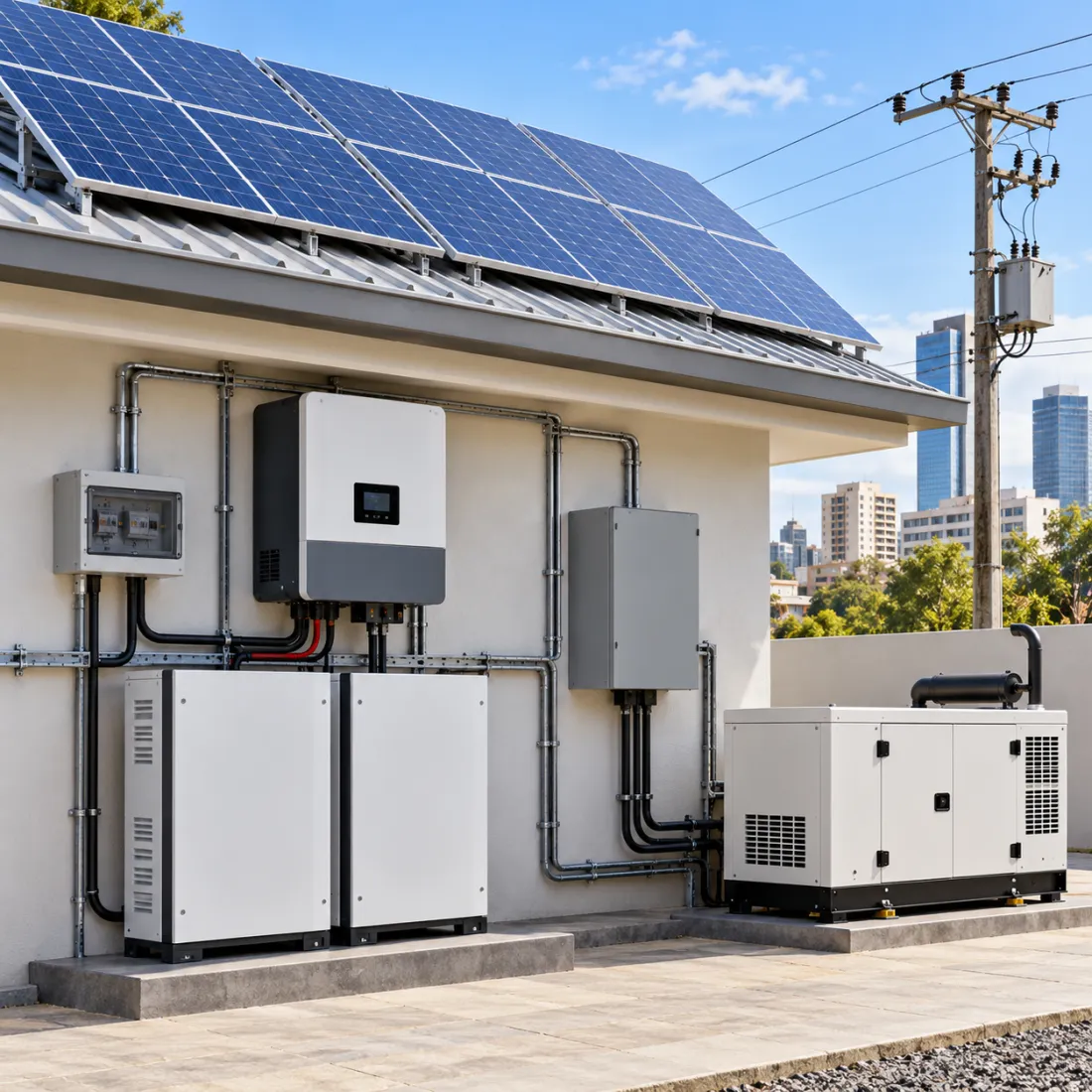
Hybrid solar
Solar generation combined with battery storage and grid or generator supply, for sites that can't afford to lose power.
- Best for
- Continuity through outages
- Core parts
- Panels, batteries, plus grid or generator supply
- Sized by
- Your load profile and continuity needs
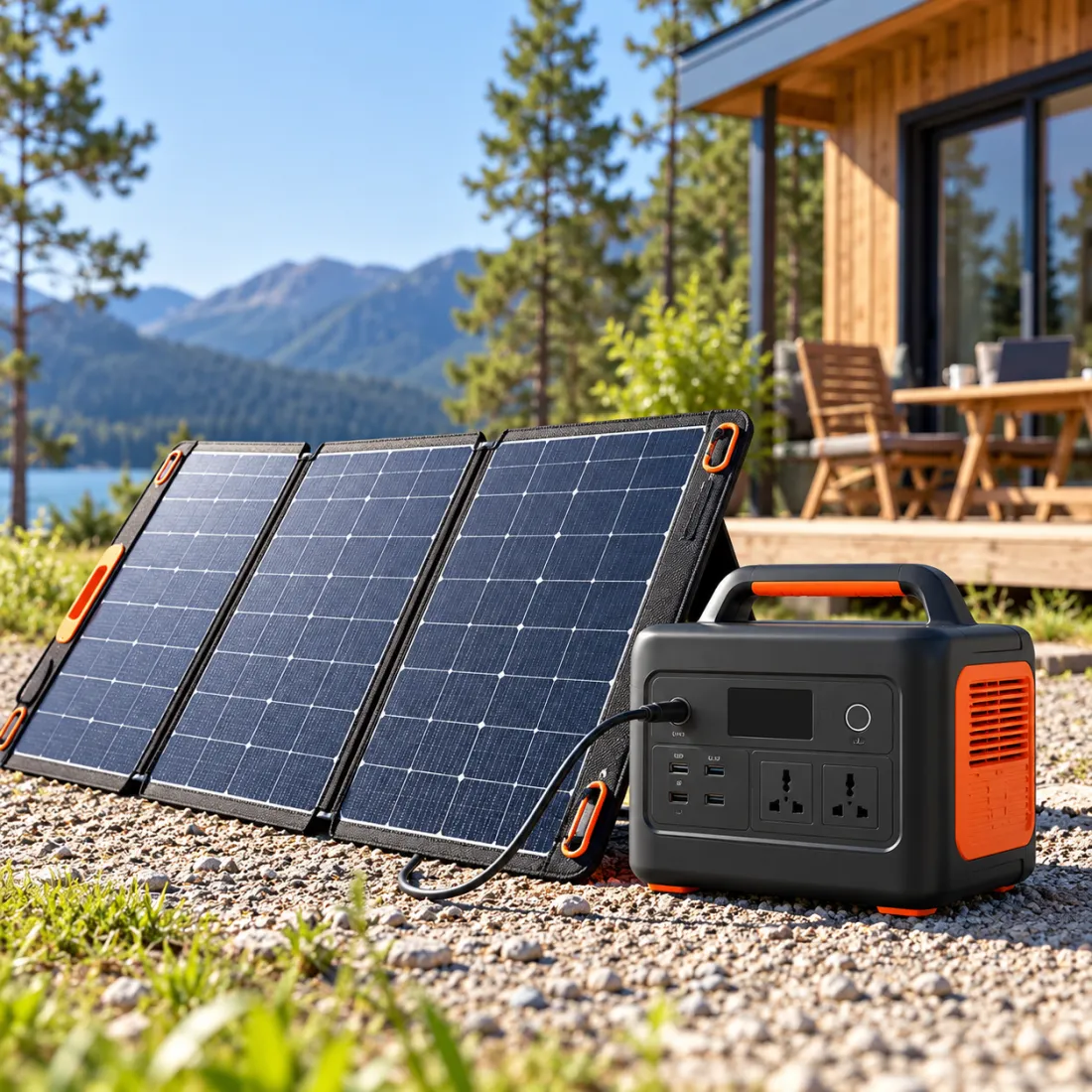
Portable solar power station
A compact battery station paired with portable solar panels, for mobile work and temporary or remote sites.
- Best for
- Mobile, temporary and remote use
- Core parts
- Battery station and portable panels
- Sized by
- The output and recharging options of the chosen model
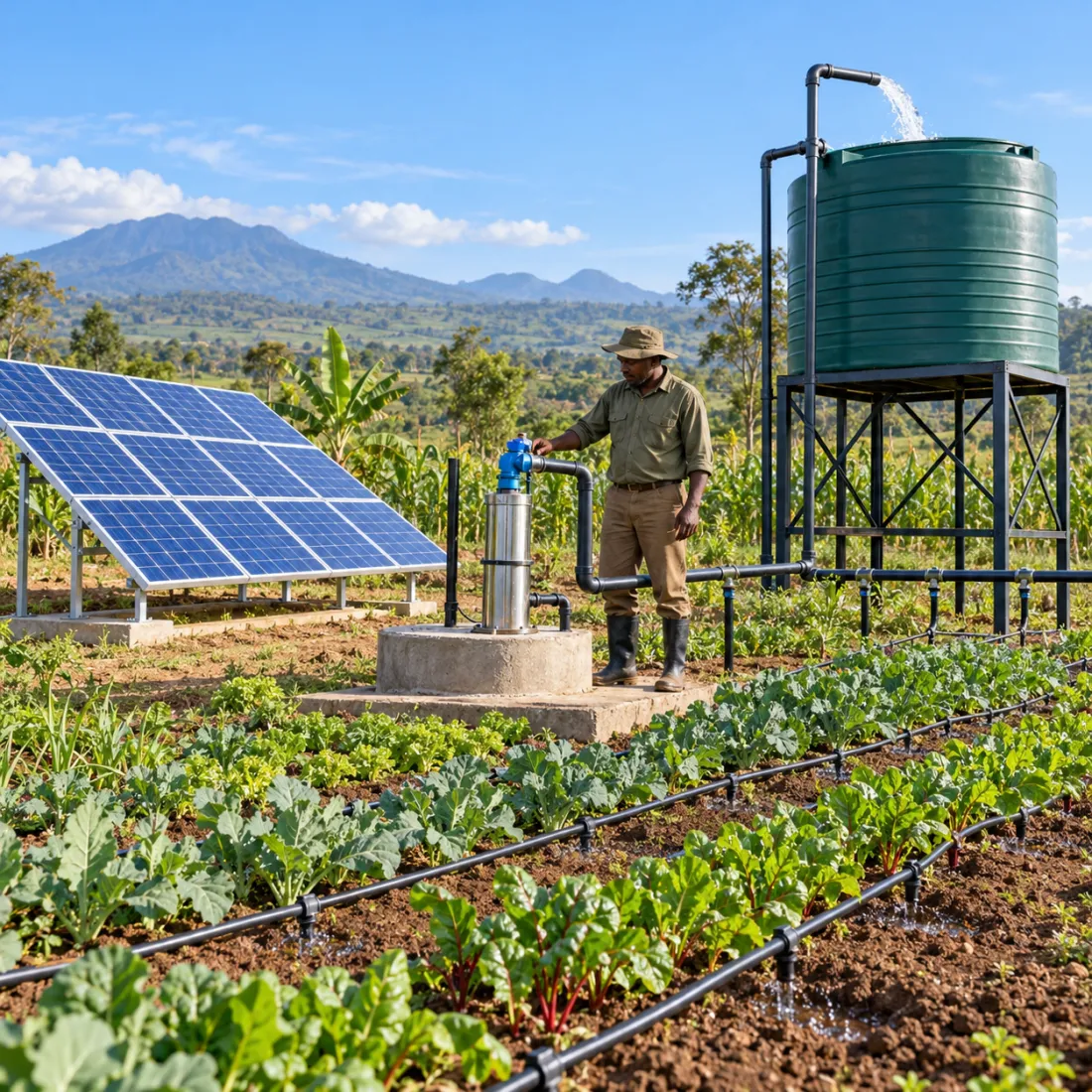
Solar well pumping for farms
Solar power that pumps water from a borehole or well into a storage tank or irrigation network. Battery storage can be added where it makes sense.
- Best for
- Farm irrigation and water storage
- Core parts
- Solar array, pump and storage tank
- Sized by
- Well yield, water depth, required flow and irrigation needs
Start with a site survey.
Tell us about the site and what you need to power, and we'll recommend the right system.